 STATION GIFTS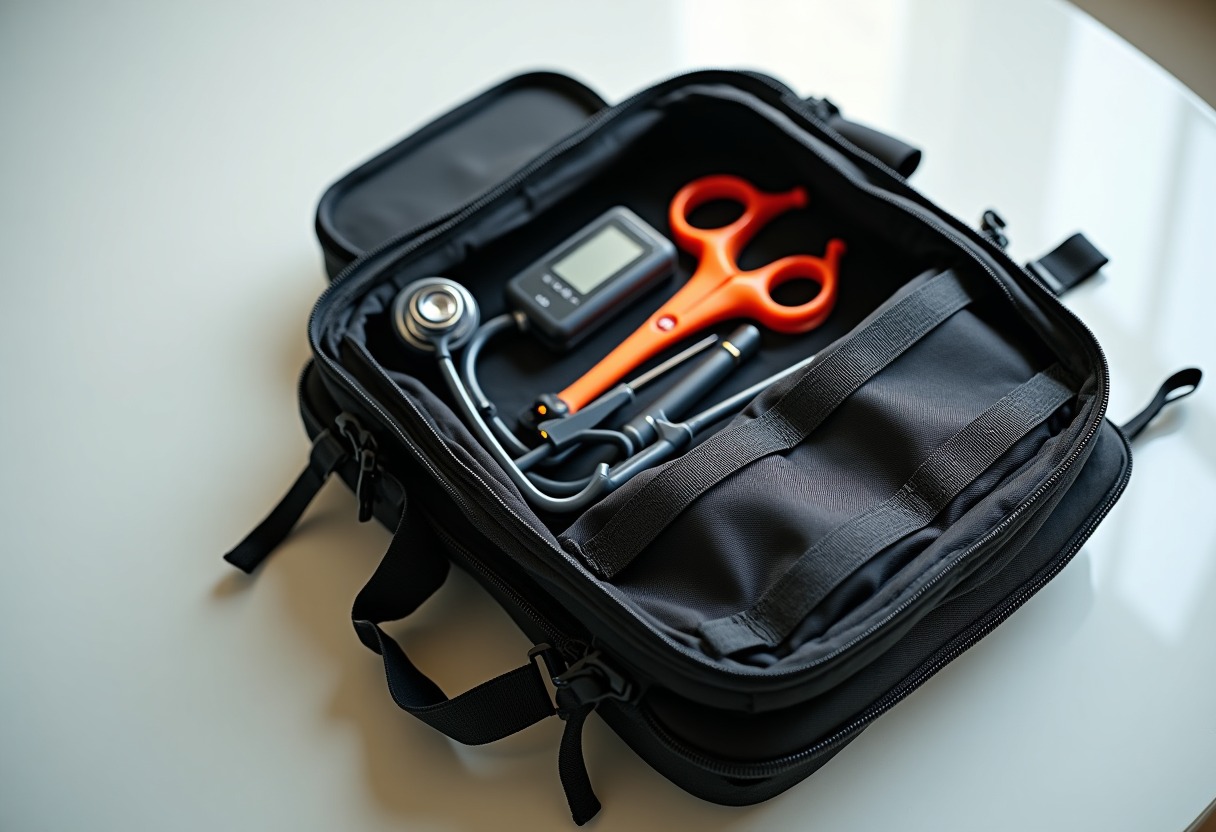
Walking into your first EMT or paramedic shift without proper personal gear is like showing up to a house fire with an empty water bottle. The ambulance stocks basic supplies, but experienced medics know that having your own reliable equipment makes the difference between smooth patient care and scrambling for tools when seconds count.
Why Personal EMT Gear Matters Beyond Standard Ambulance Equipment
Most ambulance services provide basic medical equipment, but personal gear serves critical purposes that standard issue equipment cannot. Personal tools fit your hands perfectly, stay with you across different units and shifts, and reduce the time spent searching for equipment during emergency calls.
The National Registry of Emergency Medical Technicians emphasizes that EMTs and paramedics must maintain proficiency with their tools, which becomes significantly easier when using consistent, personally-owned equipment. Your stethoscope will always sound the same, your shears will cut with familiar pressure, and your penlight will illuminate consistently.
Personal gear also demonstrates professionalism to patients, fellow crew members, and receiving hospital staff. A well-organized medical pouch or duty belt signals competence and preparedness, while fumbling with unfamiliar equipment can undermine patient confidence during critical moments.
Core Medical Tools Every New EMT Needs
The foundation of any EMT's personal kit starts with five essential tools that will be used on nearly every call. These items should be high-quality, reliable, and specifically chosen for emergency medical services rather than general healthcare applications.
A quality stethoscope tops the list of essential equipment. Hospital-grade stethoscopes designed for emergency medicine feature shorter tubing for easier maneuverability in cramped ambulance spaces and enhanced acoustics for hearing heart and lung sounds over road noise. → Shop stethoscope paramedic on Amazon for models specifically designed for prehospital care.
Trauma shears serve as the EMT's primary cutting tool, capable of slicing through clothing, seatbelts, boots, and medical tape with equal efficiency. Professional-grade shears feature titanium-coated blades that stay sharp longer and resist corrosion from repeated cleaning and disinfection. → Shop EMT trauma shears on Amazon to find heavy-duty options built for daily emergency use.
A reliable penlight enables pupil assessment, airway examination, and general illumination in low-light environments. Medical-grade penlights provide consistent brightness, multiple light settings, and durable construction that survives repeated dropping and pocket storage.
Blood pressure monitoring requires either a manual sphygmomanometer or a reliable pulse oximeter for quick vital sign assessment. Modern pulse oximeters provide accurate readings even on patients with poor circulation or in moving vehicles. → Shop pulse oximeter finger on Amazon for portable models that clip easily to uniform pockets.
Personal protective equipment rounds out the core toolkit with nitrile gloves, N95 masks, and safety glasses that meet your specific sizing needs and comfort preferences.
Equipment Organization and Carrying Solutions
Proper organization transforms a collection of tools into an efficient system that supports rapid patient care. The choice between duty belt accessories, cargo pocket organization, and dedicated medical pouches depends on your service's uniform requirements and personal workflow preferences.
| Carrying Method | Capacity | Access Speed | Durability | Best For | |-----------------|----------|--------------|------------|----------| | Tactical Medical Pouch | High | Fast | Excellent | Paramedics, detailed assessments | | Duty Belt Holsters | Medium | Very Fast | Good | Basic EMT tools, frequent access items | | Cargo Pocket Organizers | Low | Medium | Fair | Backup items, personal supplies | | Vest-Mounted Pouches | Medium | Fast | Excellent | Flight medics, tactical situations |
Tactical medical pouches offer the most comprehensive organization solution for new EMTs building their first complete kit. These pouches feature multiple compartments, elastic loops for specific tools, and MOLLE compatibility for attachment to duty belts or tactical vests. → Shop tactical medical pouch on Amazon for various sizes and organizational layouts.
Quality medical pouches include dedicated slots for stethoscopes, shear retention systems, penlight loops, and zippered compartments for smaller items like thermometer covers and alcohol prep pads. The best models feature water-resistant materials and reinforced stitching that withstand daily use and frequent washing.
Belt-mounted holsters work well for EMTs who prefer individual tool access rather than pouch-based organization. Separate holsters for shears, penlight, and glove dispensers allow for muscle memory development and extremely quick tool deployment during emergency situations.
Recommended Equipment Brands and Specific Products
Professional EMTs consistently recommend specific brands based on durability testing under real-world emergency conditions. These recommendations come from medics who have used equipment across multiple shifts, various weather conditions, and demanding emergency scenarios.
For stethoscopes, the Littmann Classic III remains the gold standard for emergency medical services. Its tunable diaphragm technology allows for both high and low-frequency sound detection without repositioning, while the 27-inch length provides optimal reach in ambulance environments.
Leatherman Raptor shears have revolutionized trauma cutting tools with their folding design that includes additional tools like a ring cutter, strap cutter, and glass breaker integrated into the handle. The ceramic blade coating resists corrosion and maintains sharpness longer than traditional stainless steel options.
Streamlight penlight models, particularly the Stylus Pro, provide medical-grade illumination with LED bulbs that last significantly longer than traditional bulbs. The aluminum construction survives repeated drops while maintaining consistent light output.
For pulse oximeters, the Masimo MightySat provides hospital-grade accuracy in a portable format that clips to uniforms or equipment pouches. Its advanced signal processing reduces motion artifacts that can cause false readings during patient transport.
Personal protective equipment should include high-quality nitrile gloves from manufacturers like Medline or Cardinal Health, which offer superior puncture resistance and tactile sensitivity compared to standard disposable gloves.
Advanced Gear Considerations Most Guides Miss
Experienced EMTs develop preferences for specialized equipment that enhances patient care beyond basic requirements. These advanced considerations separate competent EMTs from exceptional ones who anticipate needs before they arise.
Backup equipment serves as critical insurance against tool failure during extended shifts. Carrying a second penlight, backup gloves, and spare batteries for electronic equipment prevents equipment failure from compromising patient care. Many veteran EMTs keep backup trauma shears in a separate location from their primary pair.
Weather-resistant storage becomes crucial for EMTs working in harsh climates or outdoor emergency scenes. Waterproof pouches protect electronic equipment from rain, snow, and humidity while maintaining easy access during emergency calls.
Cleaning and maintenance supplies often get overlooked by new EMTs but prove essential for equipment longevity and infection control. Alcohol wipes, equipment disinfectant, and microfiber cloths for stethoscope cleaning should be standard components of any personal medical kit.
Personal comfort items like quality socks, foot powder, and blister treatment can make the difference between a productive shift and one spent dealing with preventable discomfort. → Shop penlight medical on Amazon models often include pocket clips that prevent equipment loss during long shifts.
Reference materials in pocket-sized formats provide quick access to drug dosage calculations, pediatric vital sign ranges, and protocol reminders. Waterproof reference cards or smartphone apps with offline capability ensure access to critical information regardless of location or signal availability.
For those looking for thoughtful gifts for EMTs and paramedics, consider exploring our comprehensive guide to Best Gifts For Emt Paramedic for additional ideas beyond basic equipment.
FAQ
What's the most important piece of personal gear for a new EMT? A high-quality stethoscope stands as the single most important personal tool for new EMTs because it's used on virtually every patient assessment and requires familiarity for accurate interpretation. Unlike other tools that can be substituted in emergency situations, stethoscope performance depends heavily on the user's experience with that specific instrument's acoustics and fit. Investing in a professional-grade stethoscope early in your career pays dividends through improved patient assessment capabilities and professional confidence.
How much should I expect to spend on a complete EMT starter kit? A comprehensive personal EMT gear setup typically costs between $200-400 for quality equipment that will last throughout your career. This includes a professional stethoscope ($100-150), quality trauma shears ($30-50), reliable penlight ($20-30), pulse oximeter ($40-60), tactical medical pouch ($40-80), and various smaller accessories like gloves, prep pads, and backup equipment. While this might seem expensive for someone just starting their career, quality equipment lasts for years and performs reliably when patients depend on it.
Can I use medical equipment from other healthcare settings as an EMT? Medical equipment designed for hospital or clinic use often lacks the durability and specific features needed for prehospital emergency care. Hospital stethoscopes may have longer tubing that gets caught in ambulance equipment, clinic-grade shears might not cut through heavy clothing or seat belts effectively, and standard penlights often lack the brightness needed for outdoor or low-light emergency scenes. EMT-specific equipment is engineered for the unique challenges of prehospital care and mobile emergency situations.
How do I maintain and clean my personal EMT equipment properly? Equipment maintenance starts with daily cleaning using appropriate disinfectants after each shift to prevent cross-contamination between patients. Stethoscopes require regular cleaning of earpieces and diaphragms with alcohol wipes, while metal tools like shears should be dried thoroughly after cleaning to prevent corrosion. Electronic equipment needs battery checks and storage in dry conditions, and fabric pouches or holsters should be machine-washed regularly. Proper maintenance extends equipment life significantly and ensures reliable performance during critical situations.
Should new EMTs buy equipment before starting their first job or wait to see what their service provides? New EMTs should acquire basic personal tools before their first shift because most services expect employees to arrive with essential personal equipment ready to use. While ambulances stock general medical supplies, personal tools like stethoscopes, shears, and penlights are typically the individual EMT's responsibility. Starting your first job without proper personal gear creates unnecessary stress and may reflect poorly on your preparedness and professionalism. However, check with your specific service about uniform requirements and any restricted or required equipment brands before making major purchases.
Your success as an EMT depends not just on your training and skills, but on having reliable tools that perform flawlessly when patients need you most.
Some links on this page are affiliate links. We may earn a small commission if you purchase through them, at no extra cost to you.
As an Amazon Associate we earn from qualifying purchases. This article contains affiliate links; if you buy through them we may earn a small commission at no additional cost to you.