 STATION GIFTS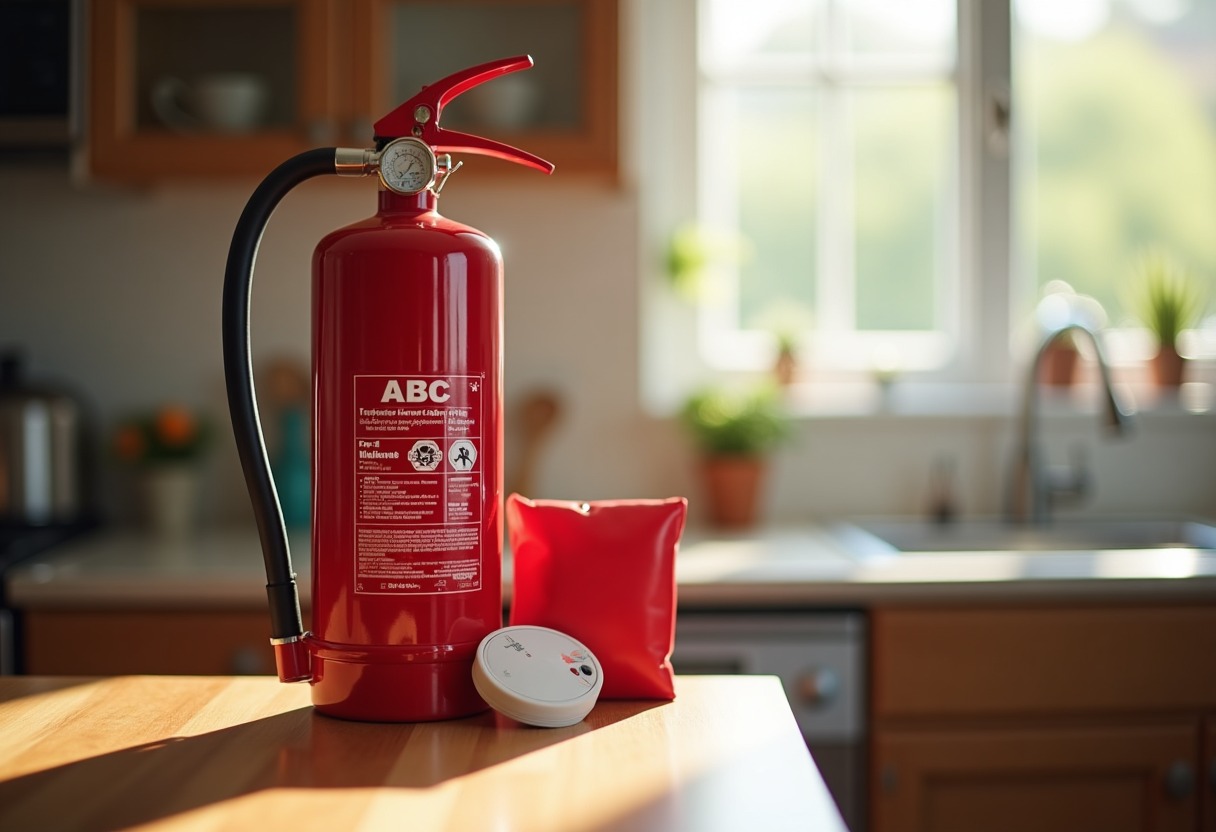
Firefighters risk their lives protecting others, yet many of their own homes lack basic fire safety equipment. Professional firefighters understand fire behavior better than anyone, which makes their home safety choices particularly telling — and their families deserve the same level of protection they provide to strangers every shift.
Why Firefighter Families Need Comprehensive Home Fire Safety
Firefighters witness house fires at their worst moments — when homeowners discover their smoke detectors had dead batteries, their fire extinguisher was the wrong type, or their escape plan never existed beyond good intentions. According to the National Fire Protection Association, home structure fires cause an average of 2,620 civilian deaths and 11,030 civilian injuries annually.
Professional firefighters know that minutes matter in a house fire. They understand that a properly maintained smoke detector provides the earliest warning, that the right fire extinguisher can stop a small fire from becoming a total loss, and that an escape ladder can mean the difference between life and death for a second-story bedroom.
The irony isn't lost on career firefighters who respond to preventable fires while their own homes may lack basic safety equipment. Fire departments issue world-class protective gear for on-duty use, but off-duty protection requires personal investment in quality home fire safety equipment.
Essential Fire Detection and Alarm Systems
Smoke detectors save lives, but location and type matter more than most homeowners realize. Photoelectric smoke detectors excel at detecting smoldering fires, while ionization detectors respond faster to flaming fires. Dual-sensor detectors provide both capabilities in one unit.
Install smoke detectors inside every bedroom, outside each sleeping area, and on every level of your home including basements. Mount them on ceilings at least four inches from any wall, or on walls four to twelve inches below ceiling height. Replace batteries annually — many firefighters choose the spring daylight saving time change as their reminder date.
Carbon monoxide detectors prevent the silent killer that claims approximately 400 American lives annually. Install CO detectors on every level of your home, especially near sleeping areas and attached garages. Unlike smoke detectors, CO detectors work best at breathing height — between knee and shoulder level when standing.
Modern interconnected detector systems ensure that when one alarm activates, all alarms sound throughout the house. Hardwired systems with battery backup provide the most reliable protection, though high-quality battery-powered units offer easier installation for existing homes.
→ Shop smoke and carbon monoxide detectors on Amazon
Fire Suppression Equipment for Home Use
| Equipment Type | Best For | Coverage Area | Maintenance Required | |---|---|---|---| | ABC Dry Chemical Extinguisher | Multi-purpose fires (paper, grease, electrical) | 40-120 sq ft | Annual inspection, replace every 12 years | | Class K Wet Chemical | Kitchen grease fires | Stovetop and immediate area | Annual inspection, refill after use | | Fire Blanket | Small grease fires, escape coverage | Personal protection | Visual inspection monthly | | Water Mist Extinguisher | Living areas, safe on electronics | 32-55 sq ft | Annual inspection, replace every 15 years |
ABC dry chemical fire extinguishers handle the widest range of home fires — ordinary combustibles like paper and wood (Class A), flammable liquids like gasoline (Class B), and electrical fires (Class C). Mount one extinguisher on each level of your home, with additional units in the garage and kitchen.
Kitchen fires require specialized attention. Class K wet chemical extinguishers specifically target cooking oil and grease fires that reach extremely high temperatures. These extinguishers create a barrier that cools the oil and prevents re-ignition — something water or ABC extinguishers cannot accomplish safely.
Fire blankets provide dual protection: they can smother small grease fires on stovetops and serve as protective covering during emergency escape through smoke-filled areas. Quality fire blankets resist temperatures up to 1,800°F and deploy quickly without requiring aim or distance calculations like extinguishers.
→ Shop residential fire extinguishers on Amazon
Emergency Escape Equipment and Planning
Second-story escape ladders provide critical backup when stairs become blocked by fire or smoke. Permanent installation models bolt directly to wall studs beneath bedroom windows, while portable models hook over window sills. Chain-style ladders pack compactly but require more upper body strength to deploy than rigid ladder systems.
Test your escape ladder's deployment at least twice yearly. Practice in daylight first, then simulate nighttime conditions. Children need hands-on practice using escape ladders — their lives may depend on muscle memory developed through repetition.
Emergency escape masks filter smoke and toxic gases for up to 15 minutes — enough time to escape most residential fires. These masks use HEPA filtration and carbon monoxide conversion technology to provide breathable air in smoke-filled environments. Store one mask in each bedroom and teach family members proper deployment.
Window security bars require quick-release mechanisms accessible from inside without keys or tools. Fire departments report tragic cases where security bars intended to prevent break-ins instead trapped families during fires. Install bars with push-button or lever releases that children can operate under stress.
→ Shop fire escape ladders on Amazon
Recommended Fire Safety Products for Firefighter Families
Multi-Purpose ABC Fire Extinguishers: Choose 2.5-pound units for bedrooms and 5-pound units for common areas. Amerex and First Alert manufacture reliable residential models with clear pressure gauges and easy-grip handles.
Interconnected Smoke/CO Detector Systems: First Alert and Kidde offer wireless interconnected systems that communicate between units without hardwiring. Look for 10-year sealed battery models to eliminate midnight chirping from low batteries.
Emergency Fire Blankets: Guardian Fire Equipment produces professional-grade blankets in compact wall-mounted cases. Their 40" x 60" size provides adequate coverage for stovetop fires or personal protection during escape.
Escape Ladder Systems: ResQLadder makes permanent installation models rated for 1,000 pounds, while Kidde offers portable hook-over models for rental properties. Both deploy quickly and provide stable footing during descent.
Fire-Resistant Document Storage: SentrySafe fire-resistant boxes protect important papers, medication, and backup hard drives from fire damage up to 1,700°F for one hour. Choose models with waterproof seals for flood protection.
→ Shop fire blankets on Amazon
Consider adding these items to your Best Gifts For Firefighters list — practical safety equipment makes meaningful presents for the firefighter who has everything but hasn't prioritized their own family's protection.
Advanced Home Fire Safety Strategies Most Families Miss
Professional firefighters understand that fire safety extends beyond equipment to behavior and preparation. Create and practice a home escape plan with two exits from every room. Designate a meeting location outside and assign someone to call 911 from a neighbor's phone — never re-enter a burning building to retrieve phones.
Install residential sprinkler systems in new construction or major renovations. Home fire sprinklers reduce fire deaths by 81% and property damage by 70% compared to homes without sprinklers. Modern residential systems use smaller pipes and require less water pressure than commercial systems.
Stage emergency supplies strategically throughout your home. Keep flashlights with fresh batteries in every bedroom — power typically fails early in house fires. Store emergency car keys near secondary exits so family members can drive away from the scene if your primary vehicle blocks access to the house.
Maintain defensible space around your home's exterior. Clear vegetation within 30 feet of structures, store firewood at least 30 feet from buildings, and trim tree branches that overhang roofs. These landscaping choices significantly reduce structure loss during wildland fires.
Document your home's contents with video walkthroughs stored in cloud storage. Include serial numbers for electronics and jewelry in separate encrypted files. This preparation accelerates insurance claims and helps families rebuild faster after total losses.
→ Shop fire safety helmets on Amazon
Frequently Asked Questions
How often should firefighter families test their home fire safety equipment? Test smoke and carbon monoxide detectors monthly using the test button — don't use candles or matches that can damage sensors. Check fire extinguisher pressure gauges monthly and inspect for physical damage or corrosion. Practice your escape plan twice yearly, including nighttime drills when visibility is reduced and family members must navigate by feel.
What's the difference between residential and commercial fire extinguishers for home use? Residential extinguishers use smaller volumes of suppressing agent but cover adequate areas for typical home fires. Commercial extinguishers contain more suppressant and cover larger areas but cost significantly more and require more storage space. For most homes, 2.5-pound extinguishers work well for bedrooms while 5-pound models suit kitchens and garages where larger fires might develop.
Where should firefighter families install fire extinguishers in their homes? Mount extinguishers near exit routes but not directly above potential fire sources — you need safe access during emergencies. Install one on each level of your home, with additional units in the kitchen, garage, and workshop. Keep extinguishers between 3.5 and 5 feet high so adults can reach them quickly but children cannot access them unsupervised.
How do firefighter families choose between permanent and portable escape ladders? Permanent installation ladders provide faster deployment and greater stability but require wall mounting that many renters cannot perform. Portable ladders offer flexibility and work in any window but take longer to deploy and require more physical strength to stabilize. Families with young children or elderly members benefit from permanent installations, while renters and physically capable families can use portable models effectively.
What fire safety equipment should firefighter families prioritize on a budget? Start with smoke detectors in every bedroom and hallway — these provide the earliest warning and cost less than $20 each. Add one ABC fire extinguisher per floor next, focusing on the kitchen and garage areas. Fire blankets for the kitchen come third, followed by escape ladders for second-story bedrooms. Carbon monoxide detectors complete the basic safety foundation before investing in advanced equipment.
The best fire safety gear sits ready but never gets used — that's exactly the outcome every firefighter family should aim for in their own home.
Some links on this page are affiliate links. We may earn a small commission if you purchase through them, at no extra cost to you.
As an Amazon Associate we earn from qualifying purchases. This article contains affiliate links; if you buy through them we may earn a small commission at no additional cost to you.